

Everything you need to
know before diving in.
Questions about Akiya Labs, the tools, buying property in Japan — I've got you covered. Can't find what you're looking for? Drop me a line.
Akiya Labs is a suite of research tools built for people seriously exploring property purchases in Japan. I cut through the noise — language barriers, scattered data, hard-to-read listings — and give you the information you need to make informed decisions.
The site was built by someone who actually went through the process: bought a house near Tokyo, navigated the paperwork, dealt with the agents. That experience is baked into every tool.
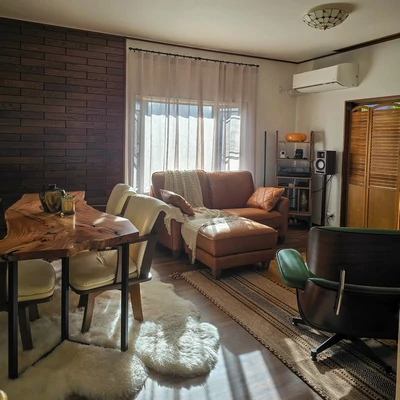
Someone who genuinely loves Japan and found the property buying process fascinating enough to build tools around it. After purchasing a house in the Tokyo area, it became clear that the biggest obstacles for foreign buyers weren't legal or financial — they were informational. Akiya Labs is the answer to that.
A membership gives you access to everything on Akiya Labs — the weekly newsletter plus seven research tools:
- Weekly Newsletter — 10 handpicked akiya deals every week, from as low as $5,000, with photos, maps, and direct listing links. Full archive unlocked on day one.
- Akiya Budget Calculator — Total cost estimator for buying in Japan
- Japan Prefecture Finder — Find the right region based on your lifestyle criteria
- Japan Future Development Map — Visualize planned infrastructure and development projects
- Akiya Bank Directory — 730+ official municipal akiya banks across all 47 prefectures
- Property Hazard Score — Check earthquake, flood, tsunami, and sediment disaster risk for any Japanese address
- Neighbourhood Score Tool — Evaluate local services, transport, healthcare, and amenities around a property
It helps you understand the real total cost of buying a property in Japan — not just the listing price. Factor in acquisition taxes, registration fees, agent commissions, renovation estimates, and ongoing costs like property tax and management fees. Stop guessing and start budgeting properly.
Japan has 47 prefectures — each with wildly different climates, costs, transport links, and lifestyles. The Prefecture Finder lets you filter by what matters to you: proximity to Tokyo, rural vs urban, climate, property price range, and more. It helps you narrow down where to look before you start browsing listings.
An interactive map that visualizes planned infrastructure projects across Japan — new shinkansen lines, highway expansions, urban development zones, and more. This is the kind of data that serious buyers use to spot undervalued areas before they become desirable. All project descriptions are available in English via integrated translation.
Japan's akiya banks are municipal databases of vacant properties, often available at very low prices or even for free. The problem: they're fragmented across hundreds of local government websites, mostly in Japanese. I've aggregated and organized these listings in one searchable place, so you can actually use them.
Japan has the highest seismic and hydrological risk of any developed country. The Property Hazard Score checks earthquake, flood, tsunami, and sediment disaster risk for any Japanese address — using official government hazard map data. Enter an address and get a clear risk assessment before you commit to a property.
It evaluates what's actually around a property — hospitals, supermarkets, train stations, schools, convenience stores, and other essential services. Enter an address and get a neighbourhood score based on real proximity data. A cheap house with no services within 30 minutes is a very different proposition from one near a JR station with a clinic and a supermarket.
Yes. I continuously add data and refine the tools based on member feedback. New features are in development — membership gives you access to everything as it's released, including new tools.
$149 per year — that's the weekly newsletter, full archive access, and all seven research tools for 12 months. No monthly plan, no hidden tiers.
The weekly newsletter (10 handpicked properties every week + full archive from day one), all seven research tools — Budget Calculator, Prefecture Finder, Future Development Map, Akiya Bank Directory, Property Hazard Score, and Neighbourhood Score Tool — plus every new tool I release going forward.
After checkout you'll receive a confirmation email with your login details. Head to Login on the site, log in, and everything is unlocked — your dashboard with all tools, and the newsletter archive.
Yes, at any time from your account page. Your access continues until the end of the annual billing period you've paid for. No questions asked.
Send me an email at [email protected] and I'll get back to you as soon as I can.
$149 per year — that's the weekly newsletter, full archive access, and all six research tools for 12 months. No monthly plan, no hidden tiers.
The weekly newsletter (10 handpicked properties every week + full archive from day one), all six research tools — Budget Calculator, Prefecture Finder, Future Development Map, and Akiya Bank Directory — plus every new tool I release going forward.
After checkout you'll receive a confirmation email with your login details. Head to Login on the site, log in, and everything is unlocked — your dashboard with all tools, and the newsletter archive.
Yes, at any time from your account page. Your access continues until the end of the annual billing period you've paid for. No questions asked.
Send me an email at contact@akiyalabs.com and I'll get back to you as soon as I can.
Yes — and without the restrictions you'd find in many other countries. There are no legal barriers for foreigners purchasing property in Japan. You can even buy while visiting on a tourist visa.
No. Owning property in Japan does not grant any special residency rights or visa benefits. As a tourist you're limited to 90 days per visit (up to 180 days per year). If you want to live there year-round, you'll need to qualify for a separate visa — work, business manager, spouse, etc.
Not necessarily. An intermediary can act as your power of attorney throughout the process. That said, visiting the property in person before making an offer is strongly recommended — photos don't capture everything.
Usually 2–4 weeks if your documents are in order and nothing unexpected comes up. Complications — wrong documents, title issues, translation delays — can stretch it out significantly.
It's difficult. Japanese banks are generally reluctant to lend to non-residents, especially for older rural properties. Most foreign buyers pay cash, or arrange financing through their home country.
In most cases, yes. The majority of properties listed on akiya banks and standard portals are freehold — meaning land is included. There are leasehold properties in Japan (where you rent the land), but these are much less common for the type of properties foreign buyers typically look at.
Property taxes: 1.4% of assessed value + 0.3% city planning tax. A typical rural property might run $300–$600/year.
Utilities: Around $100/month for a single person — roughly $40 electricity, $30 gas, $20 water. When you're away, some providers let you pause contracts.
Property management: If you're abroad for extended periods, budget $50–$200/month for someone to maintain the property.
Fire insurance: $200–$400 per two-year contract. Not mandatory, but worth considering.
Maintenance: Varies enormously depending on the condition of the property. Always get a building inspection before buying.
Japan's declining and aging population, combined with strong urban migration to cities like Tokyo, has left many rural areas with more properties than buyers. Japanese buyers also strongly prefer new homes, which drives down the value of older stock. For foreign buyers who love these areas and spend time there, it represents genuine value.
For most rural properties, probably not in the traditional sense — values don't appreciate the way they might in other markets, and can decline. But for the right person, it's an investment in joy: a base in a country you love, at a fraction of what it would cost elsewhere in the world.
Japan introduced a digital nomad visa in March 2024, valid for 6 months (non-extendable).
Yes. Most foreign buyers work with an intermediary or English-speaking agent who handles communication, translation, and paperwork. Intermediaries typically charge 5–10% of the purchase price — and for most people, that cost is absolutely worth avoiding the headaches of navigating the process in a language you don't speak.
Still have questions?
I'm happy to help. Send me a message and I'll get back to you.